All About Trauma
01 - Trauma explained
Simply put, trauma is any distressing or disturbing event that exceeds your ability to cope. Most people think of soldiers returning home from war when they hear the word trauma and think “my experience isn’t that bad” or “I shouldn’t need therapy for this”-but trauma is trauma - it is also things like being in a toxic relationship, growing up with parents who are not stable (or too needy, or never there, or <insert fill-in the blank parenting fnck up>), being in abusive work environment, experiencing bullying growing up, or even a repeated life stressor.
02 - Common responses to trauma
Being stuck in sympathetic nervous systems responses
Fight: feeling on edge, irritable, snappy at other people, and/or feeling the need to control everything.
Flight: feeling constantly restless or anxious - having this feeling of just wanting to get away everything. This may look like staying busy all time, overworking, going out too much, or avoiding people and places.
Freeze: feeling stuck or numb in life - having a lack of direction and difficulty making decisions.
Fawn: feeling like you constantly have to make other people happy (usually to keep yourself safe, without recognizing that you’re self-abandoning).
Intrusive thoughts or memories
These are thoughts or memories that you just can’t get out of your head.
Most of the time, the thoughts are not in alignment with who you are, which makes them feel even worse.
Hypervigilance
This can look like constantly scanning your environment for danger or trauma reminders. It can also look like overprepping or overplanning due to fear that something will go wrong if you don’t.
Somatic (body) Symptoms
Headaches, stomach issues, fatigues, tight muscles.
This is your body carrying the weight of the trauma while your mind is trying to “just move on.”
Weakened resilience zone
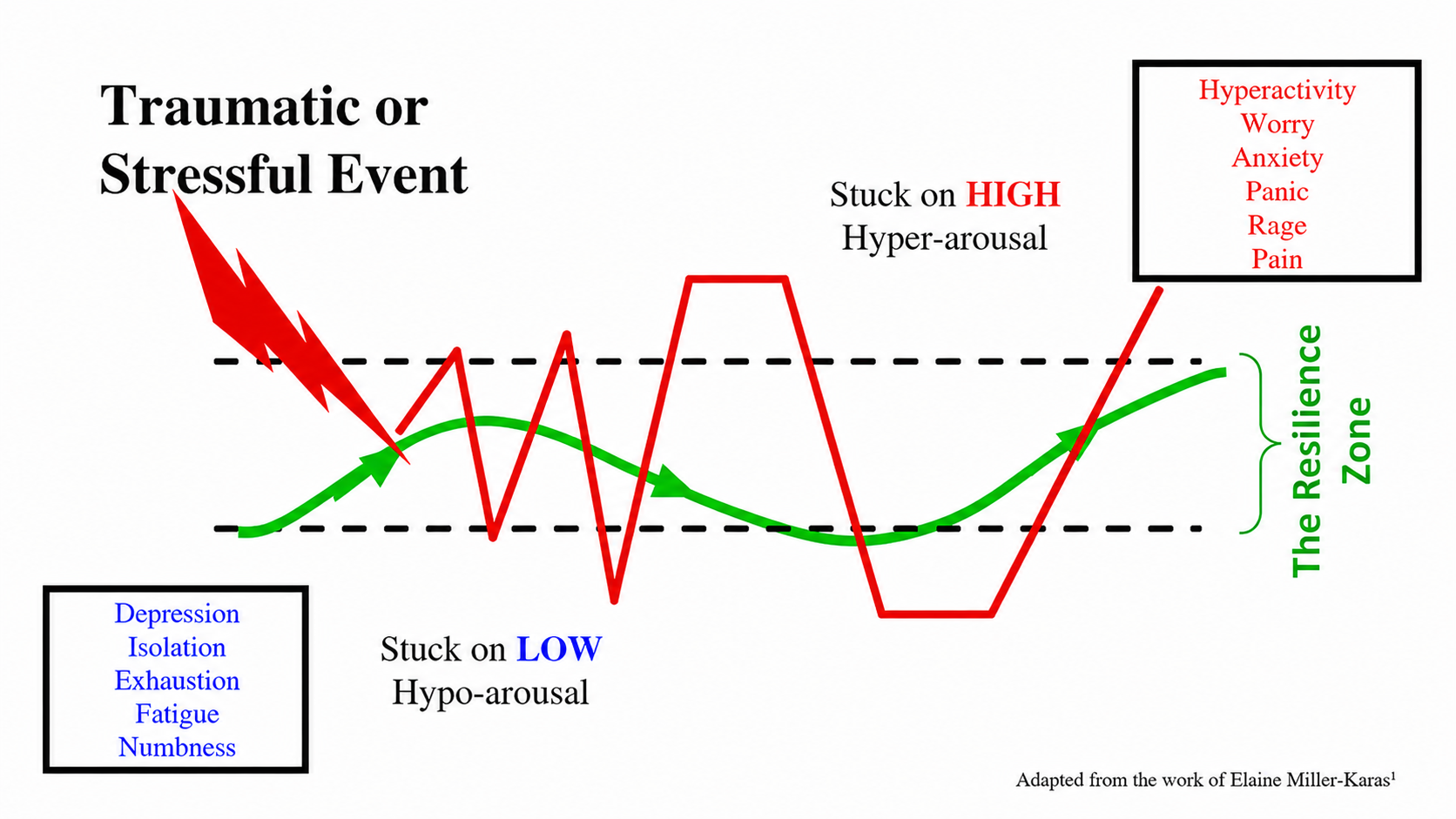
Trauma weakens our “resilience zone” and causes us to bounce around between our “high zone” and “low zone”. That is, trauma weakens our ability to bounce back after a stressful or traumatic event, causing us to bounce around between being irritable/anxious and sad/tired with little “normalcy” in between (aka that emotional rollercoaster!)
03 — Things that help
Tell yourself concrete facts about the incident to help the memory store with increased logical/adaptive information.
Validate your emotions. No matter what happened, no matter how you’re feeling - it is valid.
Spend time with trusted friends & family.
Participate in self-care: journaling, meditation/mindfulness, exercise, art activities, make sure you are eating whole foods and drinking water, etc.
If you can, however you can - reduce the amount of stress you are under to allow your nervous system a chance for recovery. Take time off work, ask others for help, get extra sleep, etc.
Pay attention to your body and practice self-soothing
Visit my resources page for more helpful information!
04 — How I can help
Understanding the trauma you are experiencing and knowing what to do is not an easy task!
Often times, after a traumatic event we feel as if we are stuck in a storm. It’s all of those responses listed above happening all at once - rather than being neatly bullet listed and bolded. This is especially true if we’ve had ongoing trauma throughout our lives. Coming to see me is like finally finding safe shelter in the storm. I am going to invite you in, help you get dried off and allow you time to get comfy and cozy by the fireplace. Once you’re ready, I’m going to help you get an umbrella, a raincoat, and some rain boots (and whatever else you may need!) so you feel prepared face the storm.
And honestly, you don't have to go back out into the storm to change the weather. Some of this work happens by going back to where it started. Some of it happens right here, in the reaction that keeps showing up on an ordinary Tuesday. Some of it happens ahead of you, in the “thing” that’s happening next month. All three are real work — we choose the way in together. A way where you can walk in this world in a differently because a giant storm isn’t raging behind you all of the time, so you’re not so exhausted and overwhelmed with just trying to survive. We find the place with the right climate for you, a place where you will thrive.